Generative AI tools are showing up across city halls and county offices, and at this year’s IMLA Annual Conference, local government attorneys got a closer look at how to draw clear boundaries around how staff can use them. Founded in 1935, the International Municipal Lawyers Association (IMLA) is a nonprofit, nonpartisan organization of more than 2,500 local government attorneys across the United States and Canada. IMLA serves as a legal resource and advocate for its members through education, publications, and appellate advocacy, and its annual conference brings the profession together to tackle the issues facing cities and counties.
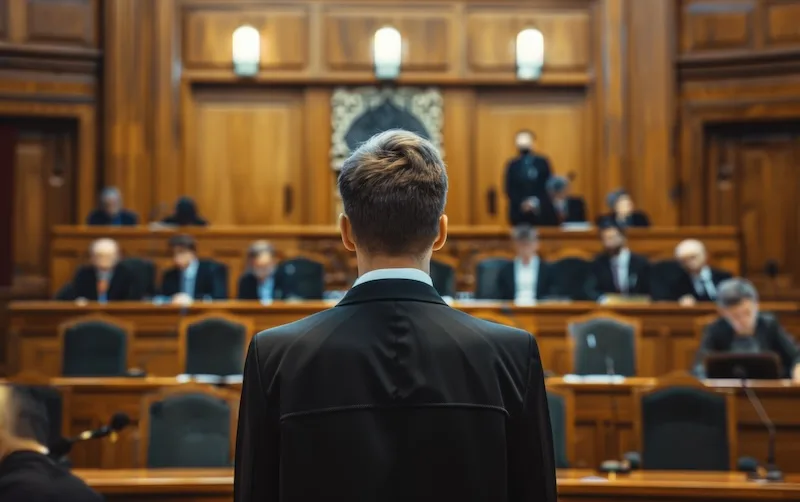
On Friday, September 25, attorney and Senior Specialist Legal Editor of Thomson Reuters Tenee’ Frazier led a two-part session, “Setting the Rules for AI: An Attorney’s Guide to Drafting GenAI Policies for Local Governments,” running from 2:45 to 3:45 PM and again from 4:00 to 5:00 PM. With AI adoption moving faster than most governments’ formal guidance, the session gave attorneys a practical starting point for putting guardrails in place.
Frazier’s presentation examined how states and cities are already handling this challenge. She walked through policy approaches from Oregon, New York, Maine, Washington, Georgia, and Kansas, plus city-level frameworks from New York City, San Jose, Seattle, and Boston, pulling out the common threads attorneys can borrow for their own communities. Rather than starting from a blank page, attendees saw how peers across different levels and sizes of government have defined the rules, so they can policies to their own needs.
Attendees left with practical tools for:
- Defining what AI use is acceptable and what isn’t
- Requiring human review of AI-generated content before it goes out
- Protecting confidential and personally identifiable information from exposure through AI systems
- Addressing how AI use intersects with public records law, copyright, and vendor contracts
Attendees found the session both informative and resourceful. One of the favorite takeaways was this reminder:
|
It is imperative that local government attorneys revisit and update AI policies as often as needed, and at least annually. The session also made clear where to focus first: drafting legally enforceable AI policies should be the primary goal, with training staff on the allowed and prohibited uses outlined in those policies as the next priority. A strong policy only protects a community if the people it governs understand it.
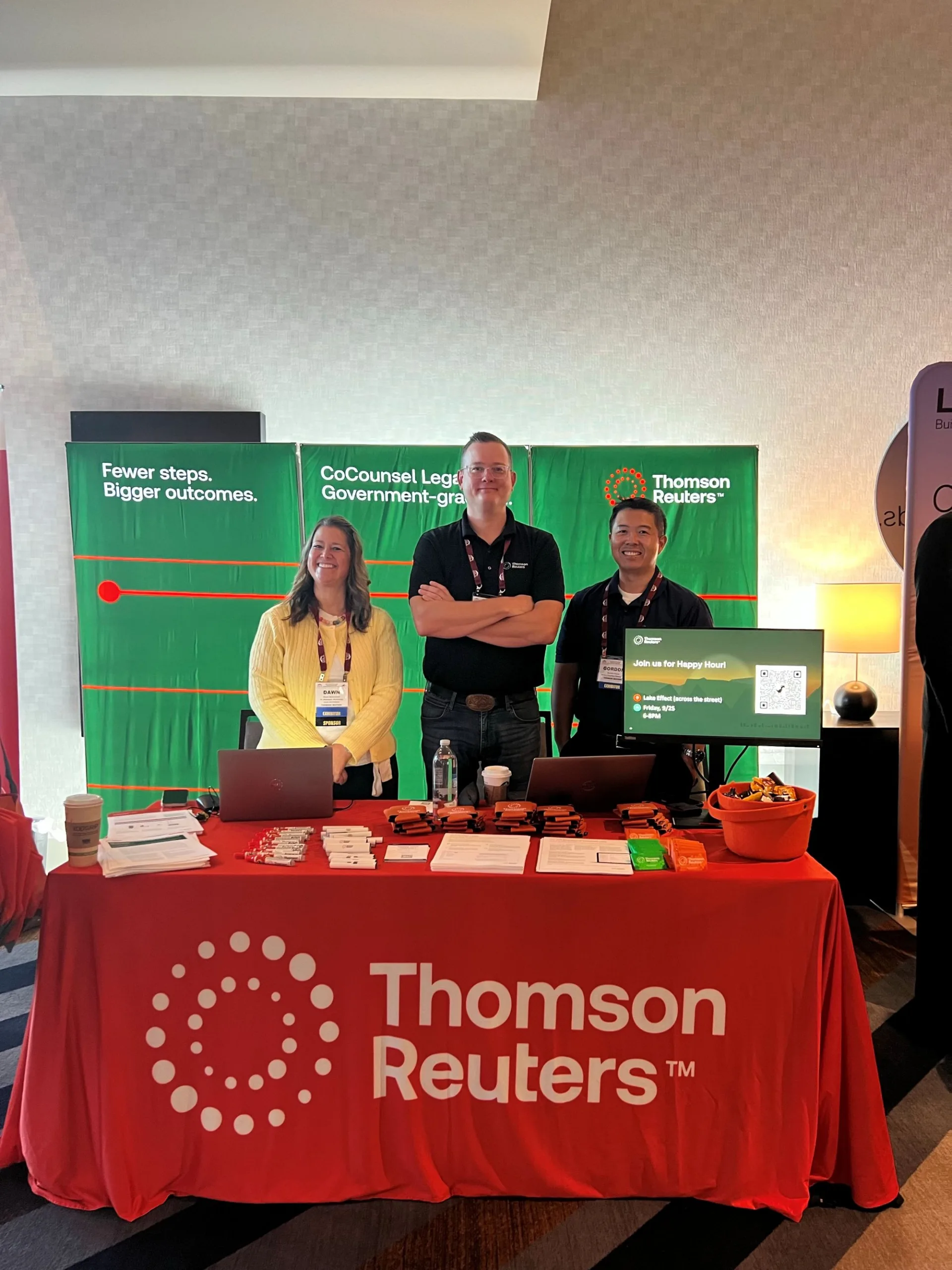
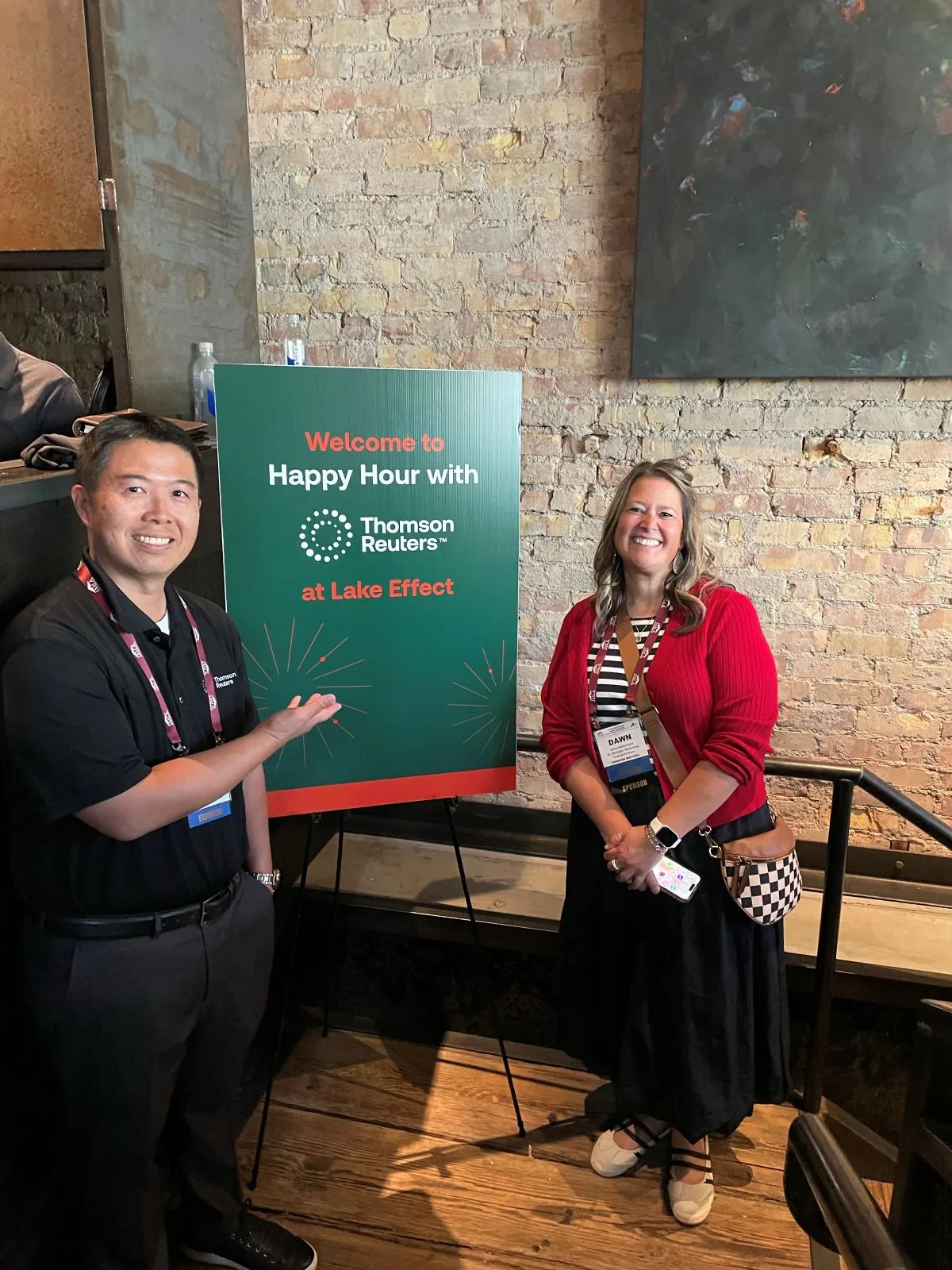
Thomson Reuters was proud to join IMLA’s flagship event as an exhibitor, and was formally recognized by IMLA for providing direct event support and resource tables. Our team connected with municipal attorneys and city legal teams throughout the conference to discuss how legal technology can support their work, including CoCounsel Legal and HighQ for government.
Those conversations reflected the same themes as the session itself: local governments want to use AI to work more efficiently on research, drafting, and collaboration, while keeping confidentiality, accuracy, and accountability at the center. We appreciated the chance to hear firsthand what today’s government legal teams are working on and look forward to continuing the conversation.
CoCounsel Legal
AI lawyers swear by: Trusted content, expert insights, and an all-in-one solution with ISO 42001 certification
See it in action ↗