Leaders Alex Fawcett and Omar Bari reveal how evaluation-driven development contributes to the next generation of CoCounsel Legal
Highlights
- The next generation of CoCounsel Legal combines startup speed with enterprise infrastructure for measurable law firm returns.
- A dedicated development team ships features continuously while a parallel team supports the existing product version.
- Thomson Reuters backing provides security standards and integrated legal content from day one.
For years, legal technology forced a difficult choice: move fast and fix things later, or build on stable infrastructure and accept slow progress. CoCounsel Legal changes the equation. By delivering speed and advanced AI capabilities at the same time, it delivers measurable returns for law firms.
Backed by Thomson Reuters, the team building the next generation of CoCounsel Legal has the infrastructure, security standards, and content assets of a global enterprise. At the same time, they operate with a focus and velocity that most large organizations struggle to maintain. That combination is not accidental. It is the result of deliberate choices about how to structure the team, how to take feedback from beta customers, and how to keep shipping new capabilities that customers can leverage.
Jump to ↓
Built to move, not to wait
Fast feedback with faster iteration
New tools, new technologies, and a new pace
What enterprise backing actually buys

Built to move, not to wait
Alex Fawcett, Vice President of Product for CoCounsel Platform, describes the setup plainly. The team building the next iteration of CoCounsel Legal has been deliberately separated from the demands of running the existing product. “We have a CoCounsel team that is solely focused on that,” he says, “and it’s on a mission to deliver that as quickly as possible to our customers. They don’t have to worry about all of the other stuff that comes with running a large enterprise product.”
When a team is not constantly context-switching between customer support tickets, maintenance work, and new product development, they can move at a fundamentally different pace. This CoCounsel development team has that protected focus, while a parallel team continues to support the existing version of the product.
The release cadence reflects this. The production version of CoCounsel ships once or twice a month, a deliberate rhythm suited to enterprise customers who need advance notice of changes. In the beta, the standard was different. “We are shipping features and functionality all of the time,” Fawcett says. “We’re really prioritizing speed to market here and getting as much into the product as quickly as possible, so we can learn and iterate based on that feedback.”
Early access to the next generation of CoCounsel Legal has arrived, and the development team has been deliberate about making the transition as smooth as possible.
“Although these products are built on entirely different technology stacks, the experience will feel seamless. We’re working hard on delivering tools and technology that make transitioning to the next generation of CoCounsel Legal quick and easy.”
Vice President of Product, CoCounsel Platform
That same commitment shapes how the toggle works in practice. “We’re going to run these products in parallel for a while,” Fawcett adds. “Customers will be able to go back and forth between both versions. That’s about making them feel comfortable with moving — they can experiment and move back to the experience that they know.”
Fast feedback with faster iteration
Speed without learning is just noise. What makes this development team’s velocity meaningful is how tightly it is connected to real customer feedback.
During the beta, each customer worked closely with a dedicated group of their colleagues. That group ran onboarding calls with knowledge managers and lawyers, then followed up at regular intervals to make sure customers were getting the most out of the system — and, as Fawcett puts it, “really helping us learn.”
That group acts as the bridge between what customers experience and what the product team builds next. And as the product matures, the feedback is getting sharper. “As people get to use the system a bit more, they get to know it a little bit better,” Fawcett says. “We get really honest feedback that’s been super useful.”
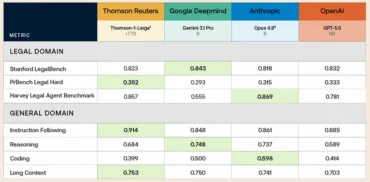
On the research side, Omar Bari, VP of Applied Research at Thomson Reuters Labs, describes a team structure built for the same kind of continuous learning. His group uses evaluation-driven development as a core principle — a disciplined approach where legal experts define what “good” looks like before building, then measure against that standard as the product evolves. “We put close to equal weight on evals and agent design, and we improve both together. Each side sharpens the other. That loop, plus a constant supply of new hills to climb, is what gives us our speed,” Bari says.
That rigor is what allows the team to move quickly without losing quality. They always know what they’re optimizing for, and as they clear one bar, they set the next.
New tools, new technologies, and a new pace
The next generation of CoCounsel Legal is not just a redesign of the existing product. It is built on an entirely different technology stack, with new tools and a new way of organizing the team around them. Fawcett notes that this architectural choice is itself what makes the speed possible. “We have a different kind of way of organizing around it using different tools and different technologies, and that is allowing us to get these things to market more quickly.”
The team is organized into a few workstreams, each owning a different layer of the product. An agent intelligence team designs the legal agentic harness, while an application experience team makes sure the best of the agent is felt by the user in its truest form. And a content team, just as focused, makes Thomson Reuters’ rich legal content natively accessible to the agent.
“We set up high agency workstreams that build in parallel, and the trust between those teams is what lets us change the shape of what CoCounsel can do this quickly.”
VP of Applied Research, Thomson Reuters Labs
What enterprise backing actually buys
Startup velocity is easier to achieve when you are starting from scratch. It is harder when you are building something that has to meet the security, compliance, and reliability standards that law firms, corporate legal departments and government agencies demand.
This is where Thomson Reuters backing becomes a genuine advantage. The infrastructure is already in place. Security standards are established. And the content — Westlaw, Practical Law, and other trusted legal sources — is already integrated. A standalone startup building in this space would take years and significant resources getting to the same starting point.
Bari says the strategy is to build agents that are designed from the ground up to draw on Thomson Reuters’ legal content as a core capability rather than an add-on. “We’ve built agents that are content native, designed from the start to draw on Westlaw and Practical Law as a core capability rather than an add-on,” he says. That includes direct access to Westlaw and Practical Law, but it goes further. Every answer lays out the steps the agent took and links each citation back into those sources, the same authoritative content lawyers already work with. The lawyer’s judgment stays at the center, and the review stays inside that same experience, so the work moves faster.
Fawcett points to something equally important: the confidence that comes with scale. When early access expands and ultimately moves to general availability, the product has to perform for every customer, not just the early adopters. “This technology is new. It’s very compute intensive,” he says. “So, we have to be cautious and roll it out step by step to make sure that when we do release it to all of our customers, it continues to perform in the way that we want it to perform.”
A pace that carries forward
One of the quieter things happening through early access is that the CoCounsel development team is still building more than a product. They are learning how to build a specific kind of product, and that learning will carry into everything that comes next.
“We’ve learned a huge amount through this process,” Fawcett says. “And I think we’re going to continue working at this pace going forward.”
That is the real promise of the startup-inside-an-enterprise model. The speed is not a phase. How the team is structured, how it takes feedback, and how it builds is becoming how CoCounsel Legal operates.
The next generation of CoCounsel Legal is scheduled to launch later this year. Learn more about how we’re building the future of legal AI.

The next generation of CoCounsel Legal
Go inside the making of the new CoCounsel Legal experience
Behind the build ↗