Highlights
AI is already part of law enforcement, so the question is how agencies evaluate it.
Purpose-built AI differs from consumer-grade AI in its data sources, citations, and audit trails.
A five-question framework helps agencies vet any AI tool before it enters an investigation.
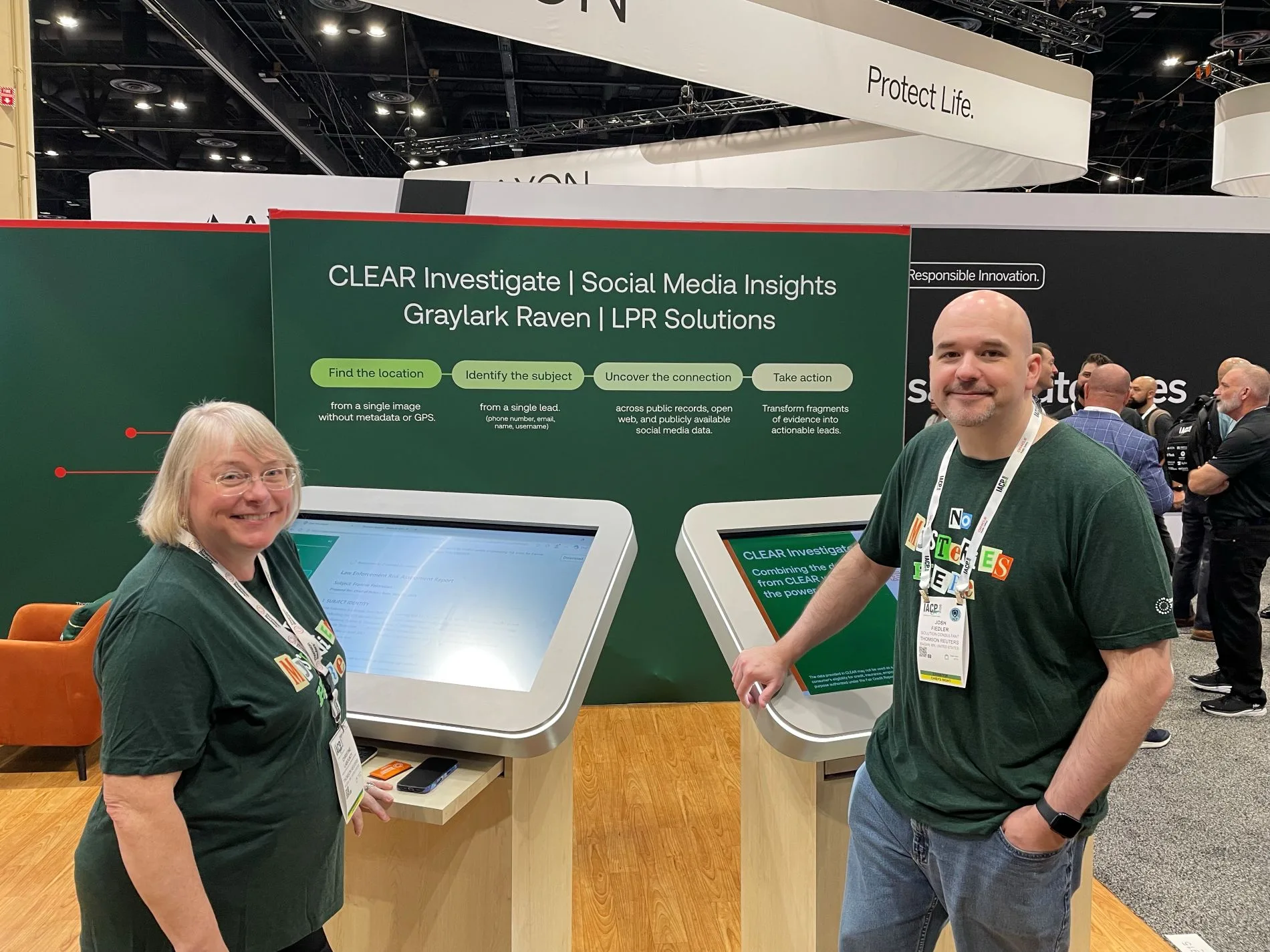
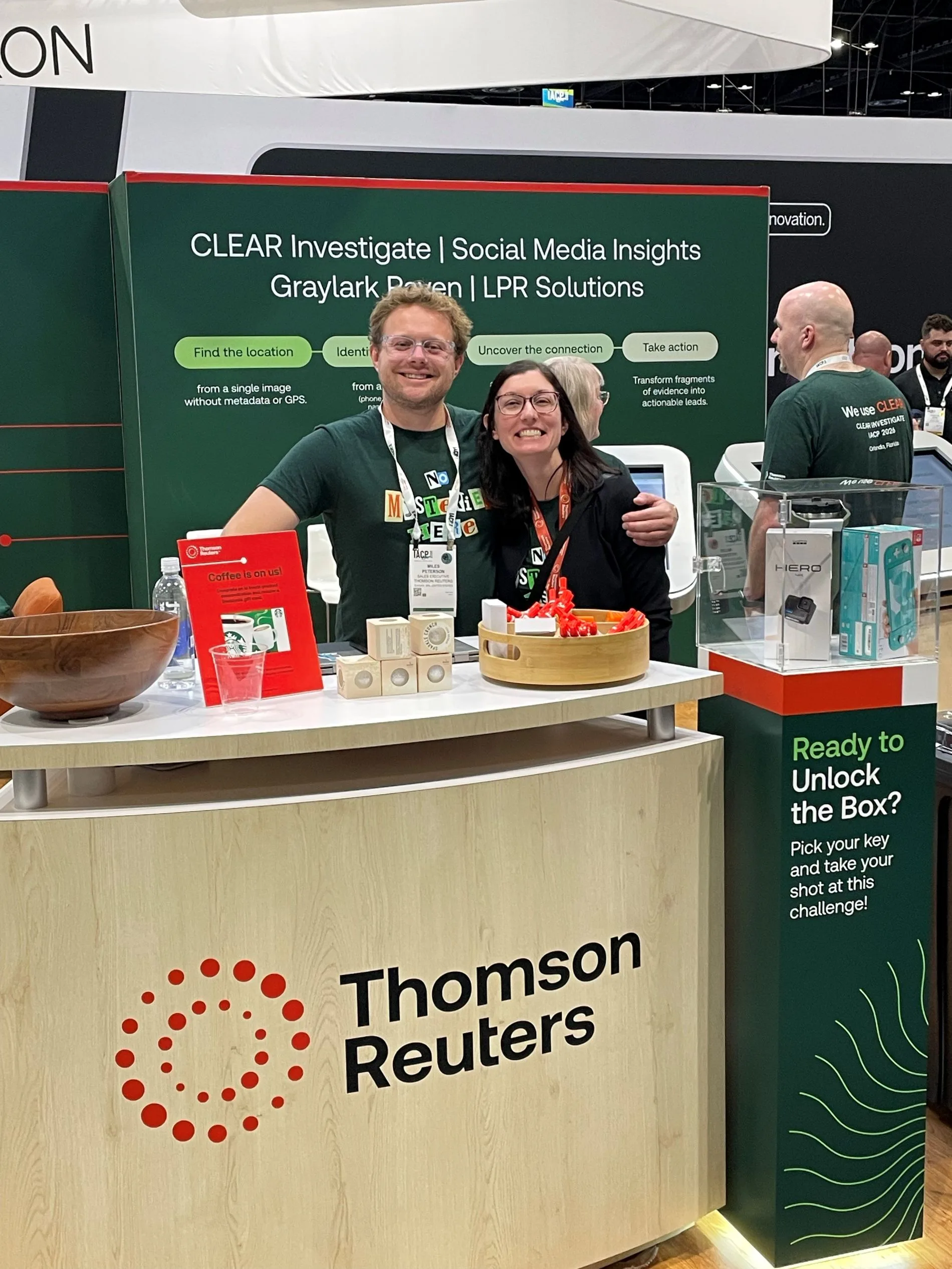
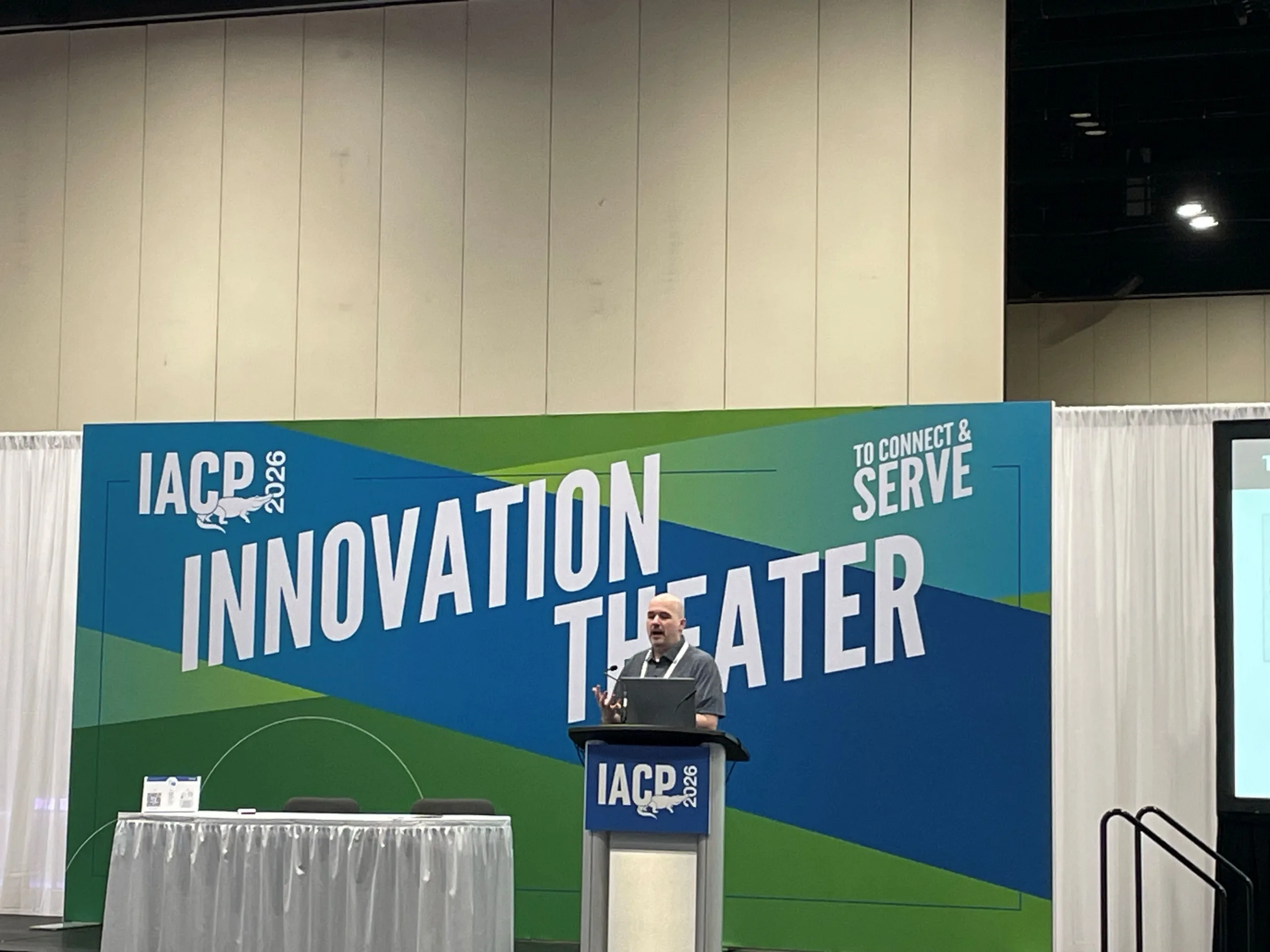
Public safety professionals gathered for the International Association of Chiefs of Police (IACP) Annual Conference and Exposition, one of the largest law enforcement events of the year. AI was a recurring topic throughout the show, and Thomson Reuters shared its perspective on how agencies can evaluate it.
Jump to ↓
Five questions to ask before any AI tool enters your agency
What CLEAR Investigate offers investigators
Not all AI is built the same
The presenters contrasted two categories of tools. Consumer-grade AI is built for everyone. It draws on unverified open-web data, can produce fabricated outputs, offers no audit trail or chain of custody, and can create data retention and FOIA exposure. Purpose-built AI is designed for specific professional use cases, with curated data sources, cited and traceable outputs, a full audit trail, and government-grade data controls.

Five questions to ask before any AI tool enters your agency
- Where does the data come from?
- Is the AI developed for law enforcement?
- Are the outputs defensible in court?
- Does the AI solution truly save time?
- Does it support documentation and reporting?
Edgar Gallard, who spent years in law enforcement before joining Thomson Reuters as Client Executive, brought the framework to life with real-world examples from his time on the job, describing situations where AI could have helped him, and how agencies are using CLEAR Investigate today. For more on this framework, see Thomson Reuters’ recent post, How to evaluate AI technology for investigations.
What CLEAR Investigate offers investigators
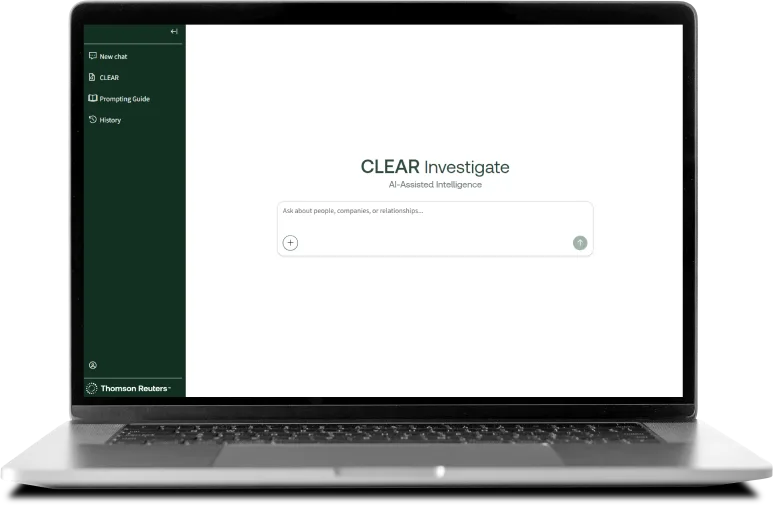
The presenters introduced CLEAR Investigate, agentic AI that researches, summarizes, and cites, built for investigators. It is designed for investigative, legal research, and fraud prevention purposes and is not a consumer reporting product. They highlighted three benefits:
- Simplify your data: fewer duplicates and faster answers.
- Reveal hidden connections: related records around your case.
- Search many sources at once: conflicting records resolved for you.
In a 2025 CLEAR Investigate customer pilot, participants reported spending up to 47% less time on investigative research.¹ One state police department described the impact this way: CLEAR Investigate showed that a suspect was incarcerated, which the investigator hadn’t known, and it connected a witness in a cold case to an old job.
1. Thomson Reuters, CLEAR Investigate internal study, last updated March 31, 2026.
Key takeaways
- AI adoption is happening whether or not an agency has a formal policy, so evaluate tools deliberately.
- Data provenance comes first. Know where every output originates.
- Look for traceable outputs and an audit trail that lets investigators explain how they reached a finding.
- Ask vendors for documented, measurable time savings.
- Choose tools that support reports with evidentiary integrity.
Continue the conversation
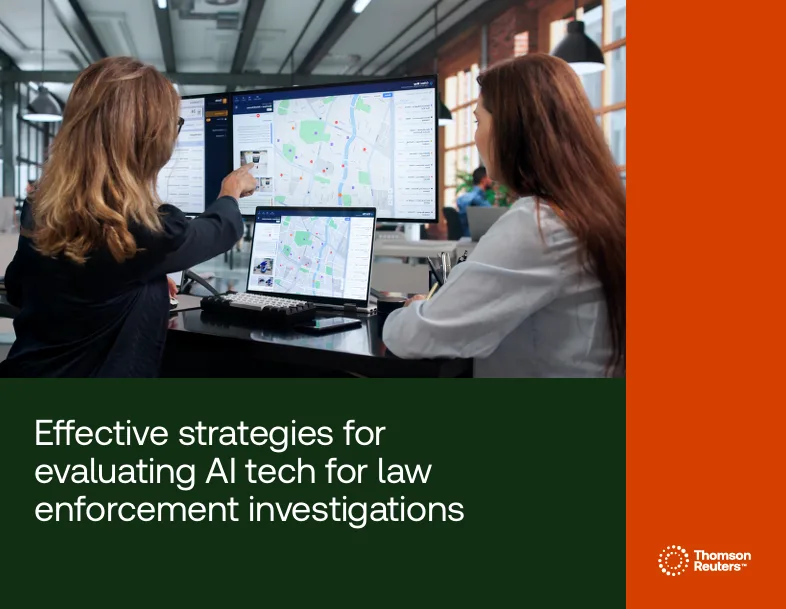
Want to see CLEAR Investigate in action? You can also download the e-book, Strategies for evaluating AI tech for law enforcement investigations.
Disclaimer
Access to these tools is limited to authorized, vetted customers.
Thomson Reuters is not a consumer reporting agency, and none of its services or the data contained therein constitute a ‘consumer report’ as such term is defined in the Federal Fair Credit Reporting Act (FCRA), 15 U.S.C. sec. 1681 et seq. The data provided to you may not be used as a factor in consumer debt collection decisioning, establishing a consumer’s eligibility for credit, insurance, employment, government benefits, or housing, or for any other purpose authorized under the FCRA. By accessing one of our services, you agree not to use the service or data for any purpose authorized under the FCRA or in relation to taking an adverse action relating to a consumer application.