What legal leaders across oil and gas, renewables and the wider energy sector should consider as decisions, records and regulations change across assets, projects and operations.
Highlights
- Energy legal positions rarely fail when made; they become hard to defend as records, people and regulations change.
- The test is whether legal can produce a defensible account of what was agreed and done on demand.
- Defensibility is an organizational capability built through grounded research, traceable review and revalidation, including when evaluating AI tools.
Two years after an energy acquisition closed, someone questions a position the legal team took during due diligence. The assets are operating, the contracts and records have moved into new systems, and the lawyer who documented the reasoning has moved on. Now the question lands on your desk: what was this based on, and does it still hold?
Every energy legal team knows some version of that moment. Judgment is the heart of the job, and in energy that judgment must hold across decades of records, across jurisdictions and with whoever reviews it next, whether that’s a regulator, an auditor, opposing counsel or the business.
Jump to ↓
Same question, different pressure points
Defensibility isn’t lost overnight
The test: can you produce the account on demand?
Defensibility is a capability, not an event
Same question, different pressure points
Upstream and oil and gas. Land and title are one example of the pressure points legal teams may face. Ownership may need to be traced through decades of deeds, while retained acreage, continuous drilling and other lease provisions can carry significant consequences if obligations or deadlines are missed. Acquisitions and joint ventures can compress review timelines further as teams assess large volumes of leases, operating agreements and other inherited records.
Midstream. One hydrocarbon stream can pass through gathering, processing, transportation and marketing agreements, each negotiated separately. They have to work as one arrangement, yet rarely does anyone read the whole chain end to end. Force majeure, indemnity and notice terms can quietly diverge, and the conflict stays hidden until a dispute or audit puts the documents side by side.
Downstream. Litigation, regulatory, commercial and environmental work can land on the same lean team, often across several states and countries. When issues or matters arrive, the job is to reconstruct what was agreed and what was done, fast.
Services and EPC. Oilfield services and engineering firms work across all three segments, carrying out the contract, permitting and compliance obligations of each.
Defensibility isn’t lost overnight
Most legal positions don’t become difficult to defend because they were wrong when they were made. They become difficult to defend because the context around them changes.
The lawyer who drafted the opinion moves on. The acquisition closes and the contracts are transferred into a different system. The asset changes hands. The regulation evolves. The people who understood the reasoning are no longer available to explain it.
Years later, the question is not whether the position was reasonable. The question is whether anyone can still show why it was reasonable.
In energy, that challenge is amplified by long asset lifecycles, complex ownership structures and regulatory frameworks that continue to evolve. A position that was well-founded when it was taken can become difficult to verify, explain or support unless the evidence, authority and decision-making process remain traceable over time.
This is where defensibility begins to erode.
Fragmented records. Contracts live in one system, land files in another and amendments in someone’s inbox. A position is only as strong as the evidence behind it, and that evidence is rarely in one place. This reaches beyond legal: land teams, regulatory and environmental counsel and commercial colleagues all rely on, add to or inherit the same records, so a gap in one place becomes risk in another.
Regulatory complexity. Requirements vary by state, agency and operation, and one change can ripple across entities and functions. Environmental and methane rules shift, and each change can touch contracts, permits and policies that were sound when written.
Change that never stops. Portfolios are acquired, divested and restructured, and each move brings inherited contracts whose terms may not fit the new reality. Positions are also tested against uses nobody planned for when the documents were signed. Pipeline companies are already asking whether decades-old easements permit carbon dioxide conversion. A position that was sound when taken can become hard to defend without anyone noticing.
Lean teams. Energy legal departments often operate with limited headcount and competing demands. When capacity is stretched, verification is the most likely step to get squeezed, even though verification is what helps make a position defensible.
The test: can you produce the account on demand?
Ask your own team: could the General Counsel’s Office produce, on demand, a defensible account of what the company agreed to and what it actually did?
Litigation readiness is the event-driven version of that question, where a suit arrives and a timeline has to be assembled. Audit readiness is the recurring version, such as a joint operating agreement non-operator audit. The standard is the same in both: the position has to be supported, traceable and able to withstand a reviewer who was not in the room.
Defensibility is a capability, not an event
In many instances, defensibility is front and center when matters arise, a regulator asks questions or an audit begins
In reality, defensibility is built much earlier. It’s reflected in how legal decisions are researched, reviewed, documented and revisited as conditions change.
Whether you’re reviewing your current processes or evaluating new technology, including AI, there are several questions worth asking:
- Is every conclusion grounded in authoritative sources?
- Can reviewers trace findings back to the clause, document, case law or regulation they came from?
- Can the process identify conflicts across agreements, portfolios and inherited records?
- Does professional judgment remain central to the final decision?
- Is sensitive legal and commercial information protected?
- Can conclusions be revalidated when contracts, regulations or assets change?
The distinction matters. This is not simply about evaluating a tool. It is about evaluating an organization’s ability to maintain defensibility.
THE BAR FOR AI IN HIGH-STAKES WORK
- 96% safeguard confidential data
- 94% authoritative grounding
- 90% explainable, defensible reasoning
Yet 41% of professionals using AI at work say they do not have tools that meet those standards.
The bar is especially high for AI. Professionals expect technology used in high-stakes work to protect confidential information, draw on trusted authority and produce outputs that can be checked and explained. Speed is valuable, but it cannot come at the expense of professional review or traceability.
Back to that question
Defensibility isn’t a litigation concept. It’s an organizational capability.
It determines whether legal teams can explain a decision years after it was made. Whether they can show how a conclusion was reached. Whether they can connect an opinion to the authority, evidence and reasoning behind it.
In energy, decisions often outlive the people, systems and circumstances that produced them. Assets change ownership. Portfolios evolve. Regulations shift. Contracts are inherited, amended and revisited.
What matters is not only whether a position was defensible on the day it was taken.
What matters is whether it remains defensible when someone asks the question later.
Can your team still defend the position when it matters most?
Explore the next step
Judgement you can defend starts with verified authority.
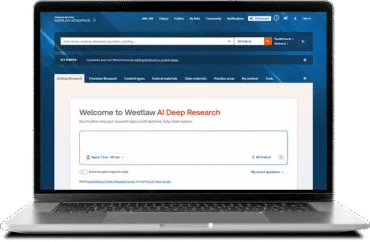
See how CoCounsel Legal grounds first-pass review of leases, joint operating agreements, and gathering and transportation agreements in Westlaw and Practical Law, so your attorneys can defend every position they sign. Explore CoCounsel Legal for oil and gas