How legal teams across oil and gas operations can identify conflicting obligations before they become disputes
Highlights
- Contracts that each pass review can still conflict across an oil and gas chain, surfacing only in a dispute.
- Indemnity, force majeure and inherited provisions are common points where terms collide and obligations diverge across connected agreements.
- Source-linked AI analysis can map conflicts earlier, while attorneys verify the language and make the final judgment.
Every contract in the chain passed review. That is what makes the dispute so hard to see coming. Consider a hypothetical oil and gas operation. A wellstream, the raw mixture of oil, gas and produced water, moves from the wellhead to a separation facility. After three-phase separation, the oil, gas and produced water follow different handling and commercial pathways. Separator gas may then undergo further treatment or processing before entering gathering, transportation or sales arrangements.
Across the production chain, multiple gathering, processing, transportation and marketing agreements may apply, involving different counterparties and negotiation dates. Each agreement may have been reviewed carefully and may appear standard on its own.
Then a force majeure event hits. Depending on the wording and circumstances, the processing agreement may provide relief while a related transportation agreement may provide different or no equivalent relief. This can create uncertainty over which obligations continue and how contractual exposure is allocated. That is the crux of the challenge. The risk may not sit in any single clause, but in the gaps between connected agreements.
Jump to ↓
The chain nobody reads end to end
Why traditional review misses it
Surfacing conflicts earlier, with sources attached
Three questions to test your own chain
The chain nobody reads end to end
A single hydrocarbon stream may be governed by gathering, processing, transportation and marketing agreements. Together they form an interconnected commercial chain, but they may be reviewed as separate documents, by different people, at different moments. Responsibility is often divided across teams, leaving no single view of how the entire chain operates.
So conflicts stay hidden until a dispute or audit forces someone to lay the agreements side by side. By then the question is no longer whether terms conflict. It’s who absorbs the loss. A single misaligned indemnity can determine which party carries a potentially significant loss.
Where terms collide
Indemnity. One agreement may carry mutual indemnities, while another makes your company indemnify one way, with a different cap or different carve-outs. A loss that travels down the chain lands unevenly. Cross-referencing indemnity and insurance clauses across numerous agreements is laborious, making it difficult to identify every inconsistency through manual review alone.
Force majeure. Agreements define qualifying events, notice requirements and relief differently. An event that qualifies for relief under one contract but not another may leave performance excused under one agreement while obligations continue under another.
Inherited provisions. Nearly 70% of the US oil and gas companies analyzed by Deloitte plan to restructure portfolios, optimize costs and divest non-core assets. As portfolios change, legal teams may need to assess how inherited contractual provisions interact across the combined portfolio. Acquisitions can bring large volumes of contracts negotiated under different assumptions. Dedications, notice periods and limitations of damages may conflict with your existing agreements, and no one drafted the combined portfolio as a whole.
Why traditional review misses it
Contract-by-contract review answers one question: is this agreement acceptable on its own terms? The chain asks another: how does this agreement interact with the others governing the same commercial arrangement? Answering that means comparing clause against clause across dozens or hundreds of documents.
Legal teams in energy run lean. Outside counsel is the usual release valve, but few budgets can stretch to routine, high-volume cross-referencing. As a result, a full chain review may not happen until a dispute, audit or acquisition forces the issue, when the options for addressing it are already narrower.
Finding these risks earlier requires more than faster review of individual agreements. Legal teams need a way to compare provisions across the portfolio, identify where obligations diverge and trace each finding back to the underlying contract language.
Surfacing conflicts earlier, with sources attached
AI-assisted analysis can help teams undertake that comparison, but only if the results remain verifiable. An answer you can’t trace is a risk of its own. In energy, positions have to hold across decades of records and withstand whoever reviews them next. “Almost right” isn’t good enough.
Legal professionals set the same bar. The Thomson Reuters Future of Professionals Report 2026 found that 94% require AI outputs grounded in verified content and 90% need reasoning they can explain and defend. Yet 41% say no tool they have today meets those standards.
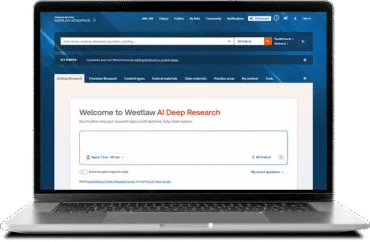
Source-linked analysis works differently from a generic summary. CoCounsel Legal supports analysis across sets of agreements, helping legal professionals compare provisions such as indemnity, force majeure, notice periods and limitations of damages. Contract-analysis outputs link back to the source documents, allowing attorneys to examine the relevant language directly. Where legal research is required, CoCounsel Legal is grounded in Westlaw and Practical Law authority. Attorneys can review the contractual language and supporting authority rather than take the output on faith.
The attorney still makes the judgment call. The difference is that they start from a map of where the conflicts are, before a dispute forces the question. That is how a General Counsel’s Office produces, on demand, a defensible account of what the company agreed to.
Three questions to test your own chain
- If a force majeure event hit tomorrow, would relief line up across every agreement on the same stream?
- Do indemnities, liability caps and limitations of damages align from one end of the chain to the other?
- For contracts inherited in your last acquisition, which have been compared against your existing portfolio?
If answering any of these requires extensive manual cross-referencing, your contract chain may be carrying risks that individual agreement reviews cannot reveal.
Your next step
Contract chains are one example of a wider pattern in energy. Obligations cross functions, entities and jurisdictions, and the evidence behind legal, tax, trade and risk decisions often sits across different systems.
If those three questions are hard to answer today, that’s a useful place to start. Learn how CoCounsel Legal for oil and gas supports legal teams working across leases, joint operating agreements and contract chains.