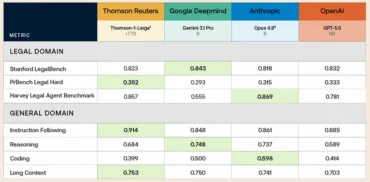
Follow these monthly updates to keep up with the next era of CoCounsel Legal
Highlights
- CoCounsel has reached one million users across 107 countries and territories.
- The next generation of CoCounsel Legal enables completing legal tasks through a single conversation.
- The platform transitions from prompt-driven AI to fully agentic infrastructure for efficiency.
CoCounsel has been chosen by one million users across 107 countries and territories as their professional-grade AI solution, marking a decisive shift in how high-stakes work gets done. AI has moved from experimentation to production, from testing to trust, from pilots to daily practice. CoCounsel Legal, a comprehensive AI solution designed specifically for legal professionals, has proven that AI can handle complex legal work with the rigor and reliability the profession demands.
But proving capability was only the beginning. The next generation of CoCounsel Legal answers a new question: What if completing any legal task required just one conversation?
That’s exactly what this reimagined version delivers. Simply describe what you need in plain language, and CoCounsel Legal automatically understands what skills and workflows need to be engaged, seamlessly planning research or drafting steps and executing. CoCounsel Legal is moving from prompt-driven AI to a fully agentic infrastructure, meaning fewer steps and bigger outcomes.
We’re building this next generation in public. From beta launch on April 20 through general availability later in 2026, this blog will document the process. Each month, we’ll share what we’re building and why, from the customer insights that sparked development to the challenges we’re solving, and what makes the next generation of CoCounsel Legal different.
Jump to ↓
April: Ask first, build second: Reimagining CoCounsel Legal, starting with the work
May: What we’re hearing from early beta participants
June: Early access to the next generation of CoCounsel Legal is here
July: How customer feedback is shaping the next generation of CoCounsel Legal
August: The new CoCounsel Legal experience is here
Interactive demo
Fiduciary-Grade AI™ built to the standard the legal profession demands
Try CoCounsel Legal demo ↗
April: Ask first, build second: Reimagining CoCounsel Legal, starting with the work
When we talk about building the next iteration of CoCounsel Legal, the conversation doesn’t start with features or models — it starts with the work. What are legal professionals doing every day? And where can AI make the biggest difference without disrupting how lawyers actually practice?
“This isn’t ‘build first, ask later.’ It’s ‘ask first, build second,'” says Tyler Alexander, Director of CoCounsel AI Reliability. The CoCounsel development teams and over 100 Practical Law attorney editors began with extensive market and customer research to home in on the next step in legal AI: not just point-in-time capabilities, but support for complete workflows — the kind that takes a matter from research through drafting, revision, and formatting in a single, coherent experience.
The data was clear about where development focus should begin. Across a range of 14 different practice areas, over 40 legal processes were identified by research participants as strong opportunities for further AI development. These use cases spanned from core legal work such as drafting and legal research to more specific use cases like patent application preparation or document-heavy written discovery review.
In addition to the quantitative study around use cases, our development team also conducted in-depth interviews with 30 participants to understand the nuances involved in the tasks they perform. It’s not enough to identify legal research as a key use case for AI — that’s a given. But hearing an attorney say “There are so many legal updates… you can spend your whole day reading,” surfaces a tangible need in research efficiency, current awareness, and synthesization. And accessing everything an attorney needs to complete a task can be messy business. “You’re toggling between tabs, notes, PDFs… It’s hard to see the bigger picture when it’s all so disjointed,” one interviewee said of their current process. These findings became the foundation for building the next generation of CoCounsel Legal and creating a truly unified, intuitive experience capable of handling nuanced legal work reliably.
Speaking with over 500 legal professionals helped our teams prioritize what matters most across firm sizes, corporate legal departments, and government roles and shaped how the next generation of CoCounsel Legal is being built.
“When we set out to build the next iteration of CoCounsel Legal, we didn’t consider product limitations. We said: this is what attorneys want to do.”
Director of CoCounsel AI Reliability
Because legal AI should adapt to the work, not the other way around.
May: What we’re hearing from early beta participants
As the next generation of CoCounsel Legal continues to take shape, one of the most valuable inputs has been direct feedback from attorneys using it in beta. These are real workflows, real matters, and unfiltered reactions from firms putting the system into practice.
Three early participants capture what is emerging.
In litigation, the feedback centers on the depth of analysis. Brooke Conkle, Partner in Consumer Financial Services at Troutman Pepper Locke LLP, shared:
“In my testing of next-generation CoCounsel Legal, I was impressed by the quality and speed of the analysis it generated. It immediately zeroed in on the precise ascertainability nuances between the two circuits — the kind of careful parsing that typically requires significant time. The underlying legal analysis genuinely blew me away and made me rethink what is possible with AI in complex litigation work.”
That idea of needing to rethink what AI can do has come up consistently in early testing. The reaction is not framed as incremental improvement, but as a shift in expectations.
In transactional work, the discussion looks different. It is less about analysis in isolation and more about how the system performs when the pressure is on.
“I’ve been impressed with CoCounsel Legal’s drafting capabilities; when I provide high-level bespoke provisions, the output is consistently strong. The next-generation of CoCounsel Legal could be a real advantage for our clients in transactional work. It helps our teams tackle complex drafting projects more efficiently, which matters when deals are moving quickly and timelines are tight.”
Partner, Private Equity at Troutman Pepper Locke LLP
Here, the value is tied directly to client work. The ability to maintain strong drafting under time pressure is where the impact becomes clear.
The third shift shows up in how attorneys are choosing to use the platform. Dan Block, Director at Sterne, Kessler, Goldstein & Fox PLLC, put it simply:
“The new version of CoCounsel Legal is now the first tool I turn to get stuff done. I used to just use CoCounsel Legal for specific tasks. Now I start everything with new CoCounsel Legal.”
That change in behavior matters. Moving from a tool used for discrete tasks to a starting point for work reflects a different level of trust and integration into the workflow.
Across these perspectives, a pattern is emerging. The feedback is not centered on a single feature or isolated improvement. It reflects a broader shift in how attorneys interact with the technology. Analysis that surfaces the right distinctions without extensive setup. Drafting that holds up in real-world conditions. A workflow that becomes part of how work begins, not just how it gets completed.
We will continue to learn as more firms engage and more use cases are tested. At this stage, what stands out is not just what the new CoCounsel Legal experience produces, but how quickly it begins to change expectations for what legal AI should be able to do.
June: Early access to the next generation of CoCounsel Legal is here
Every CoCounsel Legal customer is getting access to the next generation of the platform. Starting the week of June 22, all current customers will automatically unlock the next-gen experience — and new customers purchasing after the early access launch receive it from day one. This is not a beta. It is a customer-ready experience built to deliver measurable value immediately.
Here is what customers get from day one of early access:
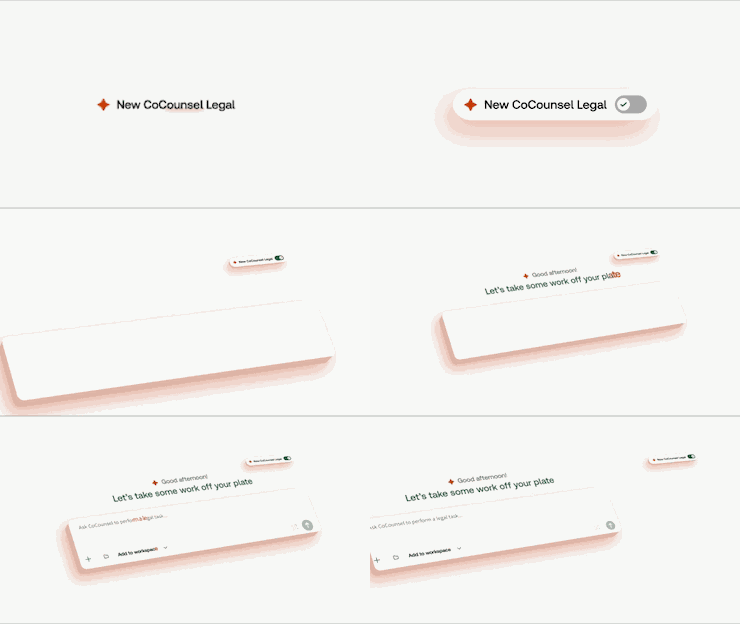
- A toggle directly in the product to switch into the next-gen experience — no separate login, no migration required.
- A dual experience — customers retain full access to today’s CoCounsel Legal and can explore next-gen at their own pace.
- A smarter, more powerful chat interface where a single plain-language query handles complex, multi-step legal work — no long-form prompts or deep knowledge of underlying systems required.
The engineering teams behind this launch have been deliberate about making the transition feel seamless.
“Although these products are built on entirely different technology stacks, the experience will feel seamless. We’re working hard on delivering tools and technology that make transitioning to the next generation of CoCounsel Legal quick and easy.”
Vice President, Product, CoCounsel Platform
That same commitment shapes how the toggle works in practice. “We’re going to run these products in parallel for a while,” Fawcett adds. “Customers will be able to go back and forth between both versions. That’s about making them feel comfortable with moving — they can experiment and move back to the experience that they know.”
Not every feature available in today’s CoCounsel Legal will be present at the early access launch. Customers can expect rapid, continuous improvements throughout the early access period, with full general availability planned for late summer.
For existing customers, early access means a head start on the most powerful version of CoCounsel Legal yet. For new customers, it means that experience is available from the moment they start.
Ready to see the next era of CoCounsel Legal in action? Watch our on-demand walkthrough with Valerie McConnell, Vice President of Solutions Engineering at Thomson Reuters.
July: How customer feedback is shaping the next generation of CoCounsel Legal
As the next generation of CoCounsel Legal moves toward general availability, customer feedback from beta users is directly shaping the experience. Recent enhancements are helping legal professionals review, refine, and finalize documents without disrupting their workflow.
“Even if we have 10 different teams building 10 features, what we want to avoid is for CoCounsel Legal to reflect that way of working,” says Abhimanyu Sahai, Senior Product Manager. “The product itself, those 10 features, should look all like it’s one product, like the same team built it, it shouldn’t look like a patchwork of 10 features that were built by different teams. I think this is something easier said than done, but we’re really trying hard.”
That coordination is paired with a tight feedback loop. A dedicated research team uses AI to cluster feedback from beta users and surface recurring themes every week, and when something rises to the top, it can move fast. “There were things that weren’t on the roadmap, or were a little far out on the roadmap, and we saw that people are asking for this, every second person is asking for this,” Sahai says. “So we brought that up front.”
One of the clearest examples of that responsiveness is a feature the team shipped just this month: showing redlines directly in the app.
The need came from a common workflow. Attorneys often start with a Word document, a template pulled from Practical Law, or one of their own, and ask CoCounsel Legal to make specific amendments to it. Getting the changes right isn’t enough. The original formatting, numbering, and structure all need to stay intact, which CoCounsel Legal’s document generation already supported.
The gap was visibility. Users could download the revised document and open it in Word to see tracked changes, but there was no way to review edits inside the app itself. Iterating meant downloading, reviewing, going back to request a fix, and downloading again, a cycle that broke the flow beta users had come to rely on.
The fix: a toggle at the top of the document viewer that shows deletions in red and additions in green, right where the conversation is happening. Users can review CoCounsel Legal’s edits, keep chatting to refine them, and only download once the document is ready.
“So simple a feature, but super impactful,” Sahai says.
It’s a small addition on paper, but it reflects the phase the team is in now: continuing to improve everyday legal workflows while investing in the next generation of AI-powered legal work while building toward features, tabular analysis, a knowledge hub, collaboration, that are technically complex but increasingly essential. The goal by year’s end isn’t just parity. As Sahai puts it, “Next year is about getting ahead.”
August: The new CoCounsel Legal experience is here
CoCounsel Legal has been rebuilt from the ground up and is engineered to work at the level of a senior associate. It reasons through legal issues using the sources your team already relies on, and you stay in control of the work at every step.
The new CoCounsel Legal experience is the most advanced version yet, now faster and more intuitive. Describe what you need in plain language, and CoCounsel Legal gets to work. It develops the right legal approach, works through each step, and delivers polished work product with citations. Two new capabilities are now available to help change how legal professionals put AI to work.
Westlaw Brief Builder
Litigators need drafts they can confidently stand behind under deadline pressure, not just drafts produced quickly.
Westlaw Brief Builder is built specifically for drafting briefs and motions, and it grounds every draft in Westlaw authority and Practical Law guidance rather than general-purpose AI guesswork. It is a transformation of research and drafting, bringing together everything litigators need to draft litigation briefs with confidence.
Westlaw Brief Builder walks you through a structured, guided process: intake and document analysis, argument identification, supporting-authority research through Westlaw Deep Research, and full draft creation. Citation checking, quote validation, and issue spotting are built into the workflow, so you can confirm that cases exist, that citations are formatted correctly, and that holdings match the propositions for which they are being cited.
Because Westlaw Brief Builder is agentic with a human in the loop, it pauses at key decision points and waits for your input. You choose which arguments to pursue, which documents to upload, who you represent, the proper jurisdiction, and which authorities and facts to include. The attorney is in control throughout the entire process. Litigators can draft five motion types, from motions to dismiss to motions to exclude evidence. Rather than replacing lawyer judgment, Westlaw Brief Builder supports it entirely.
Tabular Analysis
When you are facing thousands of documents and a deadline that will not move, Tabular Analysis lets you build a table from any subset of your workspace files, up to 10,000 documents and 100 questions per table, and run as many tables as you need. It now lives in the same workspace as the rest of your matter, no longer siloed, with a redesigned interface for smoother column creation and a cleaner single-answer view. Every answer still traces back to a clickable footnote, so you can validate the source quickly. It is powered by Thomson, Thomson Reuters’ own AI model built for legal work, so the analysis reflects how lawyers actually reason through documents.
The new CoCounsel Legal experience is available today. For legal leaders, the real question is no longer whether AI will reshape how work gets done. It is whether your organization is ready for it.
As lawyers use AI throughout more of their day, legal work still requires trust, verification, and judgment. The expanded CoCounsel Legal MCP with Claude meets that need, bringing Thomson Reuters’ authoritative legal content, domain expertise, and citation-grounded outputs into Claude’s flexible environment. Originally launched this May with Deep Research, it now brings an expanded range of capabilities. It is now available for qualifying CoCounsel Legal customers, giving lawyers a way to work between the two without losing the standards their work demands.
Learn more about CoCounsel Legal and how it can transform your workflow.