Most creditors want to see a borrower succeed, because that's how they get repaid. "Net short" lenders break that logic entirely — and after the Windstream case made the risk impossible to ignore, protections against it briefly vanished from the market before staging a comeback.
Highlights
- Net short lender protections disappeared completely from publicly filed high-yield credit agreements in Q3 2024.
- By Q1 2025, those protections had rebounded to 8% of credit deals.
- Despite the rebound, 92% of deals still lack protection against creditors who profit when the borrower defaults.
Jump to ↓
A protection that vanished, then came back
By Dan Wertman, originally published on the Noetica blog, now part of Thomson Reuters. October and May 2025.
If you’re a fan of your favorite team, you’re trusting the head coach to call plays that help your team win. But what if that coach were secretly allowed to place bets on the other team? Would you still trust him to call the plays?
That’s what “Windstream Net Short” terms try to prevent.

Assignment and Participation Clauses
These Standard Clauses provide terms for syndicated loan agreements that specify the conditions for assignments and participations of loans.
Check if your agreement blocks net short lenders ↗
The Windstream precedent
A “net short” lender is a creditor who stands to profit more from a borrower’s default than from its repayment — typically because the lender also holds a credit default swap or similar derivative that pays out if the borrower fails. That creditor’s incentives point in the opposite direction from every other lender at the table.
The risk isn’t theoretical. In 2019, Aurelius Capital triggered defaults on Windstream’s debt while holding credit default swap positions that profited from the company’s failure, sending shockwaves through credit markets and pushing Windstream into bankruptcy. “Windstream Net Short” terms exist specifically to prevent a repeat: they restrict net short lenders from exercising the same voting, enforcement, and information rights as ordinary creditors.
Borrowers introduced a second, related safeguard around the same time: “temporal limitations” provisions, which bar a lender from calling an event of default based on a breach that occurred more than a set period before the notice — closing the exact loophole that let Aurelius revive a years-old, arguably immaterial covenant issue to trigger Windstream’s default.
A protection that vanished, then came back
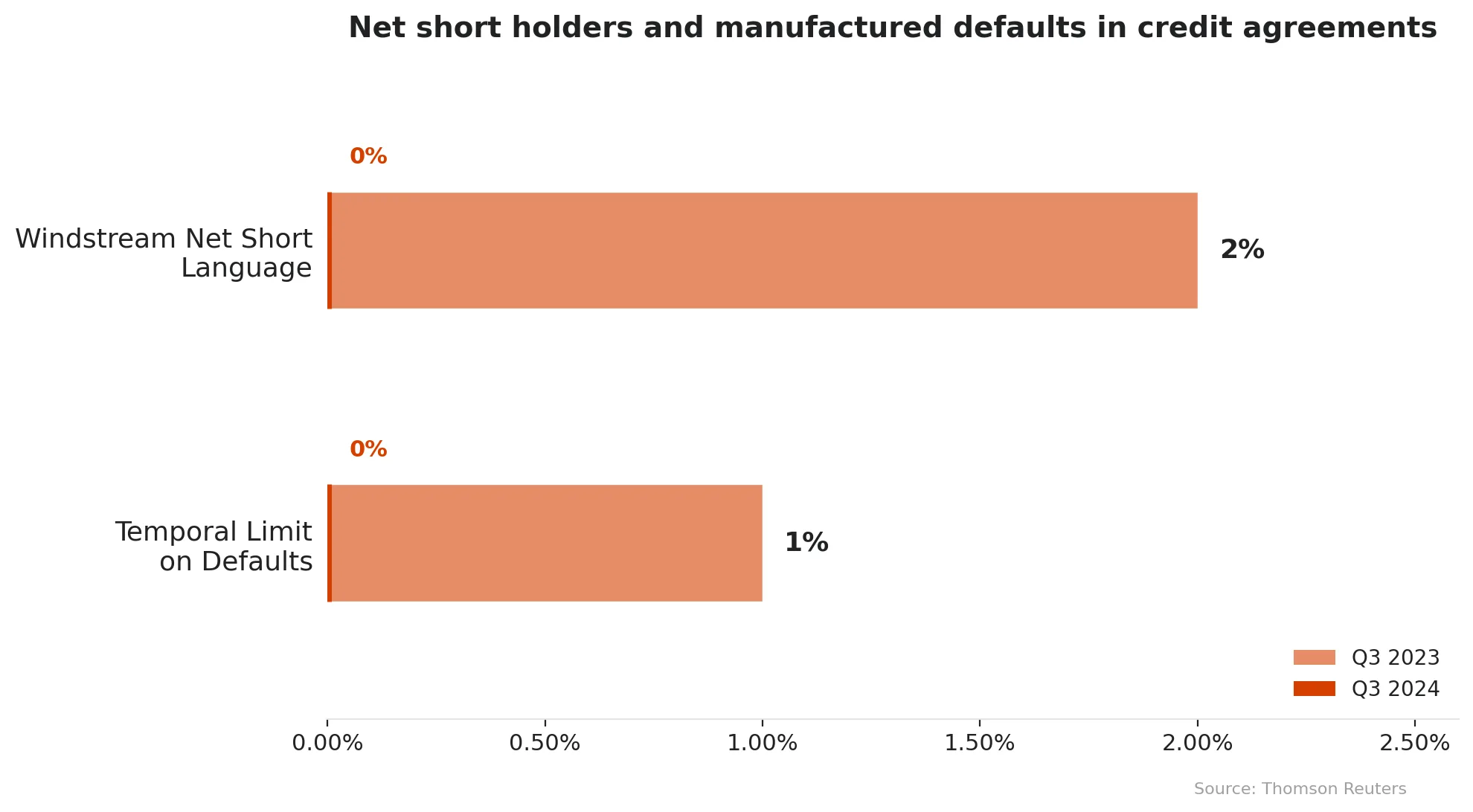
For a while, it looked like both safeguards were headed for extinction rather than becoming market standard. In Q3 2024, neither Windstream net short language nor temporal limitations on default appeared in a single publicly filed high-yield credit agreement — down from just 2% and 1% respectively a year earlier in Q3 2023.
Noetica’s Q1 2025 data reveals a dramatic comeback story, at least for one of the two: net short protections rebounded to 8% of deals by Q1 2025, after bottoming out at zero the previous quarter.
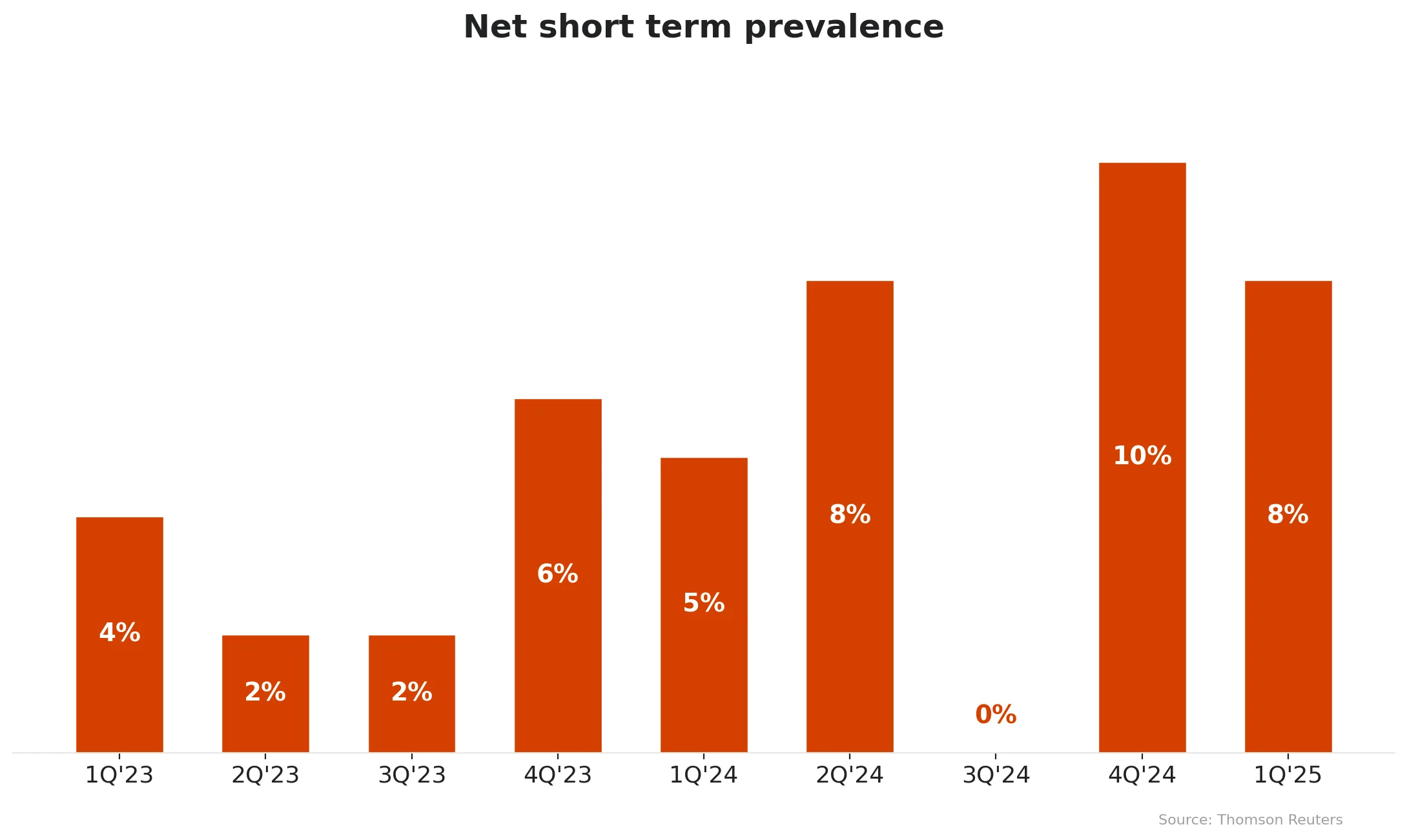
Even with that rebound, 92% of deals still lack protection against creditors who win when the borrower loses. Given the stakes involved, issuers negotiating new credit agreements may want to check whether their own lender group includes anyone with an incentive to see them fail.
For more deal-term benchmarking like this, explore the latest Capital Markets Radar Report from Noetica, now part of Thomson Reuters.