Highlights
- CoCounsel's tabular analysis transforms thousands of documents into organized, actionable insights efficiently.
- Corporate legal teams reduce document review time by 63% using AI-powered analysis.
- Tabular analysis streamlines due diligence, contract management, and litigation discovery processes.
Corporate legal departments know this reality: every deal, every compliance review, every litigation matter brings thousands of documents that need careful analysis. The traditional approach of having associates review documents one by one simply doesn’t scale when you’re facing tight deadlines and growing workloads.
CoCounsel’s tabular analysis feature changes this equation entirely. Instead of drowning in document review, you can now upload thousands of documents, ask specific questions about what matters most, and get organized answers in a clear table format.
Jump to ↓
What tabular analysis actually does
Why corporate legal teams are making the switch
The AI foundation that makes it work
The real-world difference: Time that matters

White paper
AI-powered legal drafting: the definitive guide for legal professionals
Access white paper ↗
What tabular analysis actually does
Think of tabular analysis as having a highly trained research team that never sleeps, never misses details, and organizes findings exactly how you need them. You upload your document set, define the questions that matter for your specific situation, and receive comprehensive answers organized in a table you can actually use.
This isn’t about replacing legal judgment—it’s about getting to the substantive legal work faster by eliminating the time-consuming document sorting and initial review process.
Why corporate legal teams are making the switch
Due diligence that keeps pace with business reality
M&A transactions don’t wait for document review to catch up. With tabular analysis, your team can:
- Review entire contract portfolios simultaneously for critical terms like change of control provisions, termination clauses, and liability structures
- Spot potential issues early by systematically analyzing compliance requirements across all target company agreements
- Build comprehensive risk assessments by extracting specific data points from thousands of pages in hours instead of weeks
According to Thomson Reuters customer data, CoCounsel reduces document review and contract drafting time by 63%. For corporate teams managing deal timelines, this efficiency translates directly into competitive advantage.
Contract management that actually manages
Most corporate legal departments oversee hundreds or thousands of active contracts. Tabular analysis transforms this challenge into manageable intelligence:
- Audit your contract portfolio systematically for specific clauses, renewal dates, or compliance requirements
- Track vendor obligations across multiple agreements without manual cross-referencing
- Prepare for regulatory changes by quickly identifying which contracts need updates
Litigation discovery without the chaos
When litigation hits, finding critical evidence in massive document productions becomes manageable:
- Review email communications systematically for specific topics, timeframes, or key participants
- Analyze financial records for patterns across multiple periods
- Build detailed case timelines from documents scattered across different sources
How it works in practice
CoCounsel’s tabular analysis runs on the same fiduciary-grade foundation that powers our legal research tools. Every answer includes citations so you can verify results and build defensible analyses. The system understands legal concepts and terminology because it’s designed specifically for legal professionals, not adapted from general-purpose tools.
Your documents and queries stay protected by Thomson Reuters’ enterprise security infrastructure, ensuring client confidentiality throughout the process.
The AI foundation that makes it work
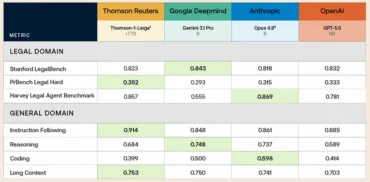
CoCounsel’s tabular analysis capabilities run on Thomson—our proprietary large language model built specifically for professional services. Unlike general-purpose AI that’s trained on internet content, Thomson operationalizes 175 years of expert judgment from Westlaw, Practical Law, Checkpoint, and Reuters.
The foundation that makes tabular analysis reliable
When you’re analyzing thousands of contracts for an M&A transaction, you need AI that understands the difference between a material adverse change clause and a standard force majeure provision. Thomson doesn’t just recognize legal terminology—it understands legal concepts because it’s built on the same authoritative sources your firm already trusts.
This isn’t about replacing the tools you know. Thomson enhances them. Whether you’re using CoCounsel for document analysis, Westlaw for research, or Practical Law for guidance, Thomson provides the AI foundation that connects these capabilities in ways that make sense for legal work.
Why this matters for document review
Generic AI models treat a termination clause the same way they’d treat a recipe or a news article—as text to be processed. Thomson recognizes that termination clause as a specific legal concept with particular implications for contract risk and compliance requirements.
This domain expertise is what allows tabular analysis to deliver the kind of nuanced, contextual answers that corporate legal teams can actually use. When you ask about liability caps across 500 vendor agreements, you get results that understand what liability caps actually mean in a business context.
Built for professional accountability
Thomson operates under the same fiduciary-grade standards that guide all our legal solutions. Every response includes proper citations, audit trails track all interactions, and the system maintains the transparency that professional services require.
This foundation ensures that when you’re building risk assessments or preparing board presentations based on your tabular analysis results, you have the documentation and verification capabilities that corporate governance demands.
The real-world difference: Time that matters
Consider a typical scenario: your company is acquiring a competitor with 500 active vendor agreements. Traditional review might require weeks of manual work by multiple team members.
With tabular analysis:
- Upload all 500 contracts
- Ask targeted questions about liability caps, indemnification clauses, data privacy terms, and termination provisions
- Receive a comprehensive table showing exactly which contracts contain which terms
- Focus human review time on contracts that actually require attention
What once took weeks now takes days, and your analysis is more thorough and consistent than manual review could achieve.
Your next move
Legal departments that adopt these capabilities now gain significant advantages over those that wait. The profession is rapidly embracing these tools and early adopters are setting new standards for efficiency and thoroughness.
Tabular analysis isn’t about working faster for its own sake. It’s about freeing your legal team to focus on strategy, risk assessment, and the complex analysis that adds real value to your organization.