
Turns out compounding obligations are dangerous in bar bets and credit documents
Highlights
- Asset sale sweep terms require that proceeds from collateral sales be used to prepay the loan.
- Step-downs reduce that prepayment obligation as the borrower hits leverage targets, potentially to zero.
- Step-downs appeared in 11% of publicly filed high-yield term loans in Q3 2024, up from 0% in Q3 2023.
Determining how much has to be paid based on a step-up or step-down function can lead to extreme results. Asset sale sweep step-downs in credit deals are a case in point.

What asset sale sweeps protect
“Asset sale sweep” terms in credit transactions require that proceeds from the sale of collateral be used to prepay the loan. The logic is straightforward: if the borrower sells the assets underlying the loan, the loan should be repaid with the proceeds from the sale.
How step-downs change the math
However, when a deal includes “step-downs,” the borrower is only required to use a fraction of the proceeds to prepay the loan once it meets certain leverage ratio tests. Taken to its logical extreme: borrowers can hit the step-down targets, sell all their collateral, and effectively end up with an unsecured loan at secured loan prices.
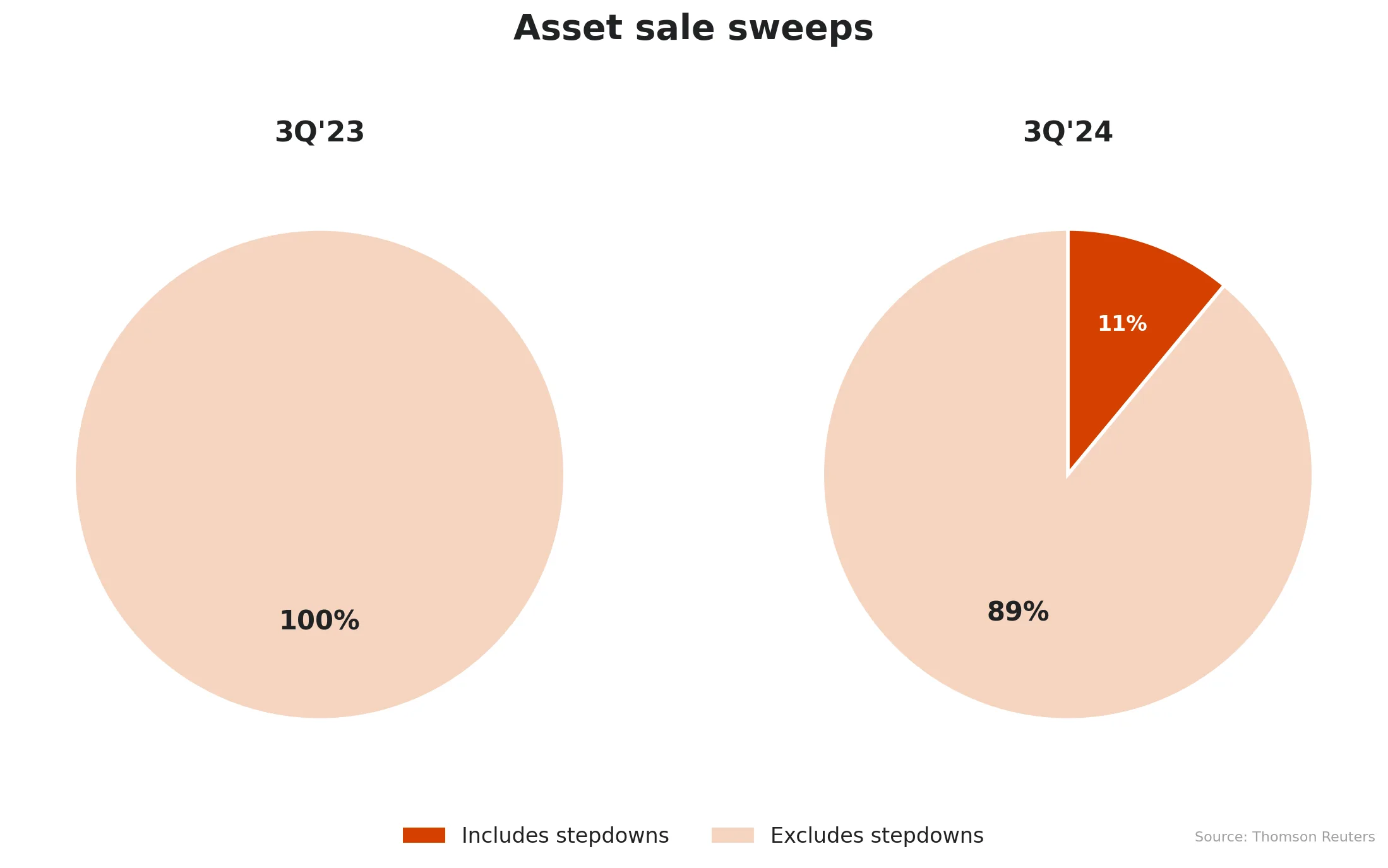
Asset sale sweep step-downs remain relatively rare, but the trend is moving in one direction. Of publicly filed high-yield term loans that included an asset sale sweep, 11% included step-downs in Q3 2024, up from zero in Q3 2023. Like many emerging credit terms, the question isn’t whether step-downs will become more common — it’s how quickly.
For more deal-term benchmarking like this, explore the latest Capital Markets Radar Report from Noetica, now part of Thomson Reuters.