
Except the borrower can appoint their successor and ignore the electorate (you).
Highlights
- Change of Control Portability lets a borrower avoid an event of default when ownership changes, effectively transferring the loan to a new owner without lender consent.
- The term appeared in 13% of publicly filed high-yield credit agreements in Q3 2024, up from 10% in Q3 2023.
- 'Affiliate transfer portability' now accounts for the entire increase, while 'ratings-based portability' has largely disappeared from the mix.
Voting is powerful because it’s simple: you elect someone to a job, they hold it for a fixed term, and at the end of that term you get to vote again. Now imagine the winner of that election could unilaterally decide to hand the job to someone else entirely — someone you never vetted, who then keeps the job for the rest of the term. That’s the world of lenders holding Change of Control Portability terms.

What portability lets borrowers do
A change of control event of default is designed around a simple idea: the borrower lenders agreed to lend to is the borrower they’ll have for the term of the loan. Change of Control Portability terms break that link. They let a borrower avoid triggering a default when ownership changes effectively handing the job of “being the borrower” to someone new, someone the lenders never diligenced, who then holds that role for the remainder of the term.
Which type of portability is growing
These terms come in several varieties, but broadly, prevalence is rising. In Q3 2024, 13% of publicly filed high-yield credit agreements included Change of Control Portability terms, up from 10% in Q3 2023.
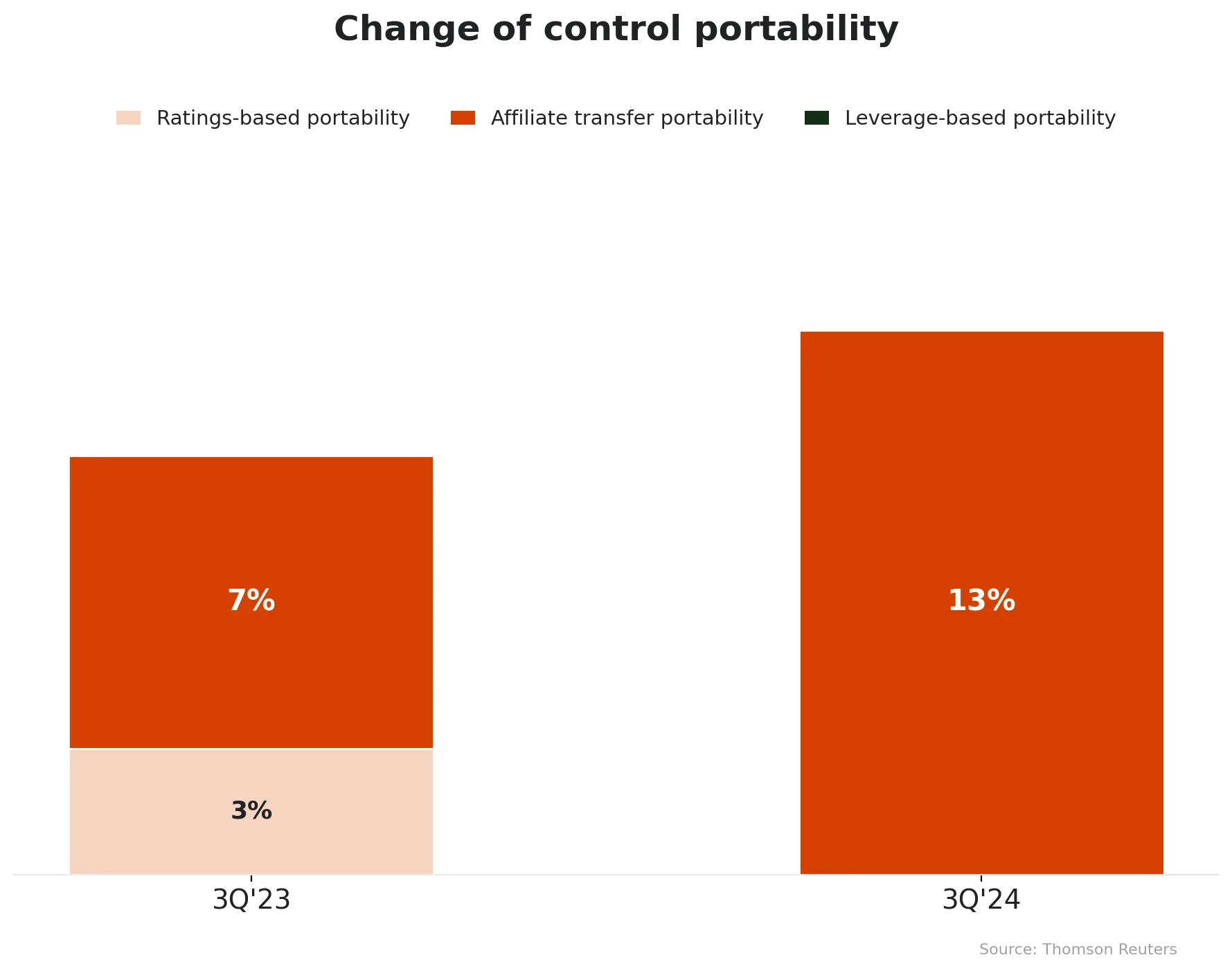
The composition shifted along with the total. “Affiliate transfer portability” — which permits ownership to move to a related party without triggering default — grew from 7% to 13% and now accounts for the entire increase. “Ratings-based portability,” which ties portability to the borrower maintaining a minimum credit rating after the change, fell from 3% to effectively zero. In other words, the growth isn’t just in how often portability appears — it’s concentrated in the version that gives lenders the least visibility into who they’re really lending to.
For more deal-term benchmarking like this, explore the latest Capital Markets Radar Report from Noetica, now part of Thomson Reuters.